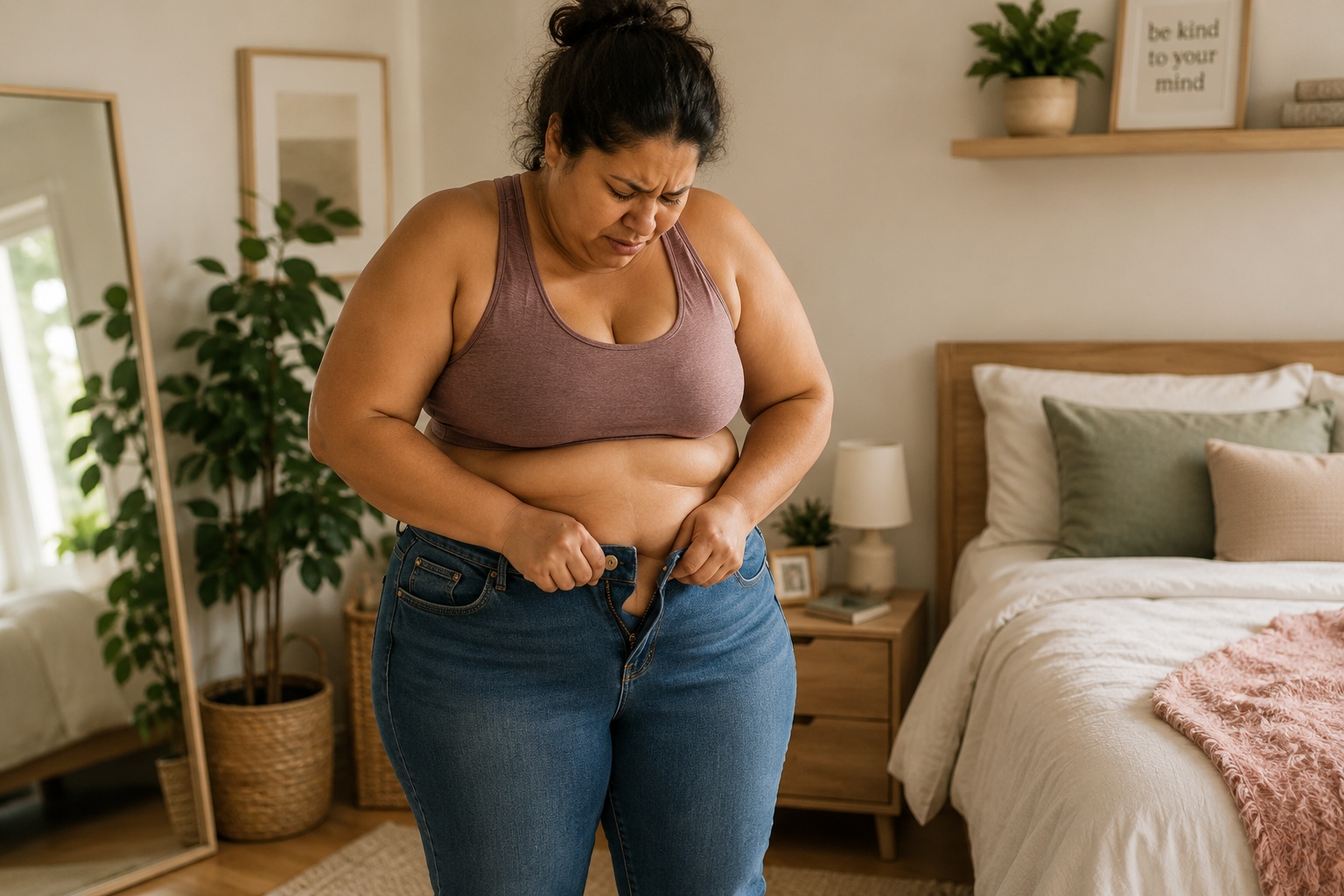

I’ve heard about GLP-1 medications everywhere, but I don’t know if this is right for me, what to actually expect, or what I’m not being told.”
That instinct to slow down and ask questions is exactly right. GLP-1 medications have become one of the most talked-about tools in weight management. They’re on the news, on social media, and probably in conversations with friends. And somewhere in the middle of all that noise, it can feel nearly impossible to find a straight, honest answer.
This article isn’t here to sell you on a medication or talk you out of one. It’s here to give you the kind of clear, thoughtful information you’d want from a provider who actually takes the time to explain things. What these medications do. Who they may genuinely help. What realistic results actually look like. And why protecting your muscle matters just as much as what happens on the scale.
You deserve that kind of conversation. When you’re ready for one, book your virtual consultation at hervitalwellness.com.
—
Key takeaways
- GLP-1 medications work by mimicking a hormone your body already makes, one that helps regulate appetite, slow digestion, and support how your body responds to food.
- Major medical organizations, including the American College of Cardiology and the American College of Physicians, now consider these medications a first-line treatment option for obesity. You don’t have to “try and fail” at dieting first.[1][2]
- In clinical studies, semaglutide (Wegovy) at its higher dose showed approximately 19% average weight loss, and tirzepatide (Zepbound) showed up to approximately 22% at its highest dose. But individual results vary quite a bit.[3][4]
- Side effects are mostly digestive, tend to be worst in the beginning, and usually get better with time and gradual dose increases.[5]
- Muscle preservation matters more than most people realize. Protein and resistance training should be part of the plan from day one.[6][7]
- Stopping a GLP-1 medication without a long-term plan often leads to weight regain. That’s not a reason to avoid them. It’s a reason to plan ahead.[6]
—
What are GLP-1 medications, and how do they work?
Your body naturally produces a hormone called GLP-1 (glucagon-like peptide-1). It plays a role in telling your brain you’re full, slowing down how quickly food leaves your stomach, and helping your body release insulin when you eat.[5]
GLP-1 medications are designed to mimic that hormone. When you take one, it turns up the volume on those natural signals. You feel fuller sooner, cravings tend to quiet down, and digestion slows. For many people, that combination leads to eating less without feeling like you’re white-knuckling your way through every meal.[3][8]
Some medications go a step further
You may have heard of tirzepatide (sold as Mounjaro for diabetes and Zepbound for weight management). It works on two hormone pathways instead of one, targeting both GLP-1 and a second hormone called GIP. In clinical trials, this dual approach produced even greater weight loss than GLP-1 medications alone.[4][9]
A few important basics
These medications started as diabetes treatments. Several are now also FDA-approved specifically for weight management in people who meet certain criteria.[10] They’re prescription medications, most commonly given as a weekly injection (though a daily oral option is now available for semaglutide too). And they’re designed to work alongside nutrition, movement, and medical follow-up, not instead of those things.[1][10]
—
Why this conversation matters during midlife
If you’re in your 40s or 50s and the way your body holds weight has changed in ways that feel unfamiliar, you’re not imagining it. The hormonal shifts of perimenopause and menopause can change how your body responds to insulin, where it stores fat, and how efficiently your metabolism runs. Our article on why weight changes during midlife goes deeper into the science behind those shifts.
For some women, those changes make GLP-1 medications a conversation worth having. For others, lifestyle strategies alone produce meaningful results, and that’s a completely valid path.
Whether a GLP-1 medication makes sense for you depends on more than a number on a scale. Your BMI, your metabolic health (things like blood sugar, blood pressure, and cholesterol), your personal and family history, what you’ve already tried, and what feels right to you all matter.[1][2]
The guidelines have shifted
Here’s something worth knowing: the conversation around these medications has changed significantly in recent years. The 2025 American College of Cardiology Expert Consensus Statement now calls semaglutide and tirzepatide the “obesity medications of choice” and specifically states that patients should not be required to “try and fail” lifestyle changes before starting medication.[1]
The 2026 American College of Physicians guideline says the same thing, listing both medications as first-line treatments.[2]
That doesn’t mean medication is right for everyone. But it does mean that if you and your provider decide it makes sense for your situation, you’re not choosing a “last resort.” You’re choosing a first-line, evidence-supported option.
—
What kind of results can you realistically expect?
This is where honest expectations matter most. The headlines and before-and-after photos don’t tell the whole story.
What the clinical trials show
Semaglutide (Wegovy): At the standard 2.4 mg weekly dose, participants in the STEP 1 trial lost an average of about 15% of their body weight over 68 weeks.[3] A newer, higher dose (7.2 mg weekly) was studied in the STEP UP trial and showed approximately 19% average weight loss over 72 weeks. Nearly half of participants on that higher dose lost 20% or more, and almost a third lost 25% or more.[4][11] This higher dose has been filed for FDA approval and is expected to become available soon.[12]
Tirzepatide (Zepbound): At its highest dose (15 mg weekly), tirzepatide produced approximately 21% average weight loss over 72 weeks, with up to about 22% among those who stayed on treatment as planned.[4][9] In a head-to-head comparison, tirzepatide outperformed semaglutide 2.4 mg, and fewer people stopped taking it because of side effects.[9]
What’s coming next
Newer medications are in late-stage development that may produce even greater weight loss. Retatrutide, a triple-hormone receptor agonist targeting GLP-1, GIP, and glucagon receptors, showed approximately 24% average weight loss in a phase 2 trial at 48 weeks, with weight still declining when the study ended. Lilly has now completed multiple Phase 3 trials (the TRIUMPH program) with over 5,800 participants, and results have been announced across obesity, type 2 diabetes, knee osteoarthritis, and cardiovascular disease. It is not yet FDA-approved or publicly available, but it’s one to watch.
Benefits beyond the number on the scale
For some people, these medications may also support heart health. In the SELECT trial, semaglutide reduced the risk of major heart events by 20% in patients who already had heart disease and were living with overweight or obesity (but didn’t have diabetes).[15] Interestingly, that benefit appeared to go beyond what weight loss alone would explain.[16]
Why these medications may work especially well for women
Here’s something that doesn’t get talked about enough: research suggests these medications may actually work better for women than for men. A large review of 64 clinical trials found that women lost significantly more weight on GLP-1 medications than men did, about 10.9% compared to 6.8%. Researchers believe this may be partly because GLP-1 and estrogen share some of the same metabolic pathways in the body.
For postmenopausal women, there’s an even more interesting finding. An early study found that women taking both semaglutide and menopause hormone therapy lost more weight than women on semaglutide alone, at every time point measured over a full year: 7% vs. 5% at three months, 13% vs. 9% at six months, and 16% vs. 12% at twelve months.
The study was small, and larger research is needed to confirm these results. But it raises an important question worth discussing with your provider: if you’re already considering or using hormone therapy for menopause symptoms, there may be an added metabolic benefit when combined with a GLP-1 medication.
This is one more reason why your full hormonal picture matters when making treatment decisions. It’s not just about the medication. It’s about how all the pieces of your health fit together.
If you’re navigating both weight management and menopause symptoms, a consultation can help you understand how these pieces fit together. Book your virtual visit at hervitalwellness.com.
What the evidence doesn’t promise
No study can guarantee how much weight any one person will lose. Results vary quite a bit from person to person. Some women see dramatic changes. Others see more modest ones.
GLP-1 medications themselves are not new. Providers have been prescribing them for type 2 diabetes for nearly two decades, and the overall safety profile is well established. What’s newer is their use at higher doses specifically for weight management in people without diabetes, and the long-term data in that specific context is still growing. The newer dual and triple agonists (like tirzepatide and retatrutide) have shorter track records as well.
That’s not a reason to hesitate if you and your provider decide this is right for you. It’s simply worth understanding what we know well, what we’re still learning, and why ongoing follow-up matters.
The muscle conversation no one is having enough
Here’s something that deserves more attention than it usually gets: when you lose weight from any source, including GLP-1 medications, some of that weight can come from muscle, not just fat. Especially if protein intake and strength training aren’t part of the picture.[6][16]
In the STEP 1 trial, about 38% of the weight lost was lean body mass (which includes muscle).[6] A recent review found that roughly two-thirds of studies on these medications showed more muscle loss than expected.[16]
This matters because muscle supports your metabolism, your bone health, your strength, and your independence as you age. Losing it unnecessarily is something worth actively working to prevent, and it absolutely can be prevented with the right plan. More on that below.
—
What every woman should know before starting
- These medications are a tool, not a shortcut. They work best as part of a bigger plan that includes how you eat, how you move, and regular check-ins with your provider.
- They’re not necessary or appropriate for every woman dealing with midlife weight changes. Many women see real improvement through lifestyle changes alone, and that path is just as valid.
- Results are different for everyone. There’s no way to guarantee a specific outcome before you start.
- Protecting your muscle takes deliberate effort. It won’t happen on its own.
- Side effects are common early on but usually manageable. They tend to improve with time.
- If you stop the medication without a long-term plan, weight regain is likely. This is a long-term strategy, not a quick fix.
Separating myth from fact
| Myth | Fact |
|---|---|
| GLP-1 medications are a quick fix. | They’re one tool among several, designed to work alongside nutrition, movement, and ongoing care.[1] |
| Everyone loses the same amount of weight. | Results vary a lot. Some people see modest changes, others more significant ones.[2], [3] |
| You have to fail at dieting first. | The ACC now says patients should not be required to “try and fail” lifestyle changes before starting medication.[1] |
| You can stop once you hit your goal weight. | Research consistently shows weight regain is common after stopping, with up to two-thirds of lost weight returning within a year without continued support.[4] |
| These medications only burn fat. | Weight loss from any source can include muscle. Without enough protein and resistance training, a real portion of what you lose may be muscle, not fat.[4], [5] |
| Side effects mean it’s not working. | Digestive side effects are common early on and usually improve with time and gradual dose increases.[6] |
—
Who may be a good candidate?
What the guidelines say
Current guidelines generally consider GLP-1 medications for adults with a BMI of 30 or above, or a BMI of 27 or above with at least one weight-related health condition like type 2 diabetes, high blood pressure, or high cholesterol.[1][2][10]
But candidacy isn’t just about a number. Your full health picture, your history, what you’ve tried before, and what matters to you all play a role. That’s why this decision is best made in a real conversation with a provider who takes the time to understand your situation, not through a quick online quiz.
What to expect with weight loss
Weight loss on these medications is gradual. It happens over months, not weeks. The biggest results tend to come with continued treatment, appropriate dose increases, and consistent lifestyle support.[3][4] And there’s no way to predict exactly how much weight any one person will lose.
Dealing with side effects
The most common side effects are digestive: nausea, constipation, diarrhea, and a reduced appetite.[5] They tend to show up most when you first start or when your dose goes up. For most people, they get better over time.
A few things that can help: eating smaller meals, eating more slowly, staying well hydrated, and working with your provider on a gradual dose increase schedule rather than jumping up too quickly.
With the higher 7.2 mg semaglutide dose, some participants in the STEP UP trial experienced dysesthesia, an unusual tingling or altered sensation, in about 23% of cases. Most of these resolved on their own during the trial.[4][11]
Reach out to your provider if you experience severe stomach pain, vomiting that won’t stop, signs of dehydration, or anything that feels concerning.
Protecting your muscle (this part really matters)
If there’s one thing to take away from this entire article, it might be this: protecting your muscle during weight loss is not optional. It’s essential.
Pairing a GLP-1 medication with enough protein and regular strength training is one of the single most important things you can do for your metabolism, your bones, and your long-term physical resilience.[6][7]
A joint advisory from the American College of Lifestyle Medicine, the Obesity Medicine Association, and other organizations recommends strength training at least three times a week, plus at least 150 minutes of moderate aerobic activity weekly, for anyone on these medications.[7]
Protein can be tricky when your appetite is reduced. Eating protein-rich foods first in a meal helps. So can high-protein shakes or bars when solid food feels like too much. But protein alone isn’t enough. Without structured resistance training, muscle loss is hard to prevent.[7]
Our article on [why strength training matters more after 40] explores this in more depth, and it’s especially worth reading if you’re considering or already on a GLP-1 medication.
If you want help building a plan that protects your long-term health, not just the number on the scale, schedule your consultation at hervitalwellness.com.
Staying on track with monitoring
These medications aren’t a “set it and forget it” situation. Regular follow-up lets your provider check how you’re responding, adjust your dose, watch for side effects, and keep an eye on your labs over time.
—
What happens if you stop taking a GLP-1?
This is one of the most important parts of this conversation, and one that doesn’t get talked about enough.
GLP-1 medications work by influencing your appetite and metabolism while they’re active in your body. When you stop, those effects go away. For many people, appetite returns to where it was before treatment.[6][17]
In the STEP 1 extension study, participants who stopped semaglutide after 68 weeks regained about two-thirds of the weight they’d lost over the following year.[6][17] A 2025 review confirmed this pattern across multiple studies, with people regaining an average of about 9.7 kg after stopping semaglutide or tirzepatide.[6]
This isn’t a reason to avoid these medications
It’s a reason to plan ahead. Think of it this way: if you’re going to start, it’s worth having a conversation early about what the long-term plan looks like.
That might mean staying on a lower maintenance dose. It might mean transitioning to a lifestyle-focused approach with a clear structure. It might mean something else entirely. The point is that these conversations should happen at the beginning, not after you’ve already stopped and the weight is coming back.[6]
—
When is it worth having the conversation?
A conversation about GLP-1 medications may make sense when:
- You’ve been working on lifestyle changes and want to explore what else might help
- Your BMI and health profile meet the criteria that make you a potential candidate
- You have conditions like prediabetes, type 2 diabetes, or high blood pressure where weight management could offer broader health benefits
- You want a thorough, honest discussion about benefits, risks, and what to realistically expect before making a decision
- You’re already on a GLP-1 medication and want guidance on muscle preservation, managing side effects, or planning for the long term
When to contact your provider right away
Some symptoms during treatment need prompt attention:
- Severe stomach pain that won’t go away (could signal pancreatitis or gallbladder problems)
- Vomiting that won’t stop or an inability to keep fluids down (risk of dehydration and kidney issues)
- Signs of an allergic reaction like rash, swelling, or trouble breathing
- Low blood sugar symptoms if you’re also taking insulin or certain diabetes medications
- A lump or swelling in your neck, hoarseness, or difficulty swallowing (rare, but worth getting checked)
What to bring to your appointment
- A list of your current medications and supplements
- Your weight history and what you’ve tried before
- Family history of diabetes, heart disease, thyroid cancer, or MEN2
- Recent labs if you have them (metabolic panel, A1c, lipids, thyroid)
- Your questions, your concerns, and your goals
—
The bigger picture
GLP-1 medications can be a genuinely helpful tool for the right person. But they’re one tool among several, not a replacement for a complete, personalized plan.
The real goal isn’t just a smaller number on the scale. It’s protecting your metabolic health, your muscle, your bones, and your overall wellbeing for the long run. And that takes a plan built around you, not a prescription handed out without context.
You deserve a provider who will sit with you, look at the full picture, and help you figure out what’s genuinely right for your body, your health, and your life.
If you’re considering a GLP-1 medication or want to talk through your options, book a consultation.
—
Frequently asked questions
Can GLP-1 medications help with menopause-related weight gain?
They may help some women manage weight during midlife, but they’re not specifically designed for menopause-related changes. The hormonal shifts of perimenopause and menopause affect more than just appetite. They change insulin sensitivity, fat distribution, and muscle mass too. Whether a GLP-1 medication makes sense depends on your overall health, your BMI, and your individual goals, not on menopause status alone.
How much weight can I realistically expect to lose?
In clinical trials, semaglutide (Wegovy) at its higher 7.2 mg dose produced about 19% average weight loss, and tirzepatide (Zepbound) at its highest dose produced up to about 22%.[4] But averages don’t tell the whole story. Some women lose more, some less. There’s no way to predict your exact result in advance.
What are the most common side effects?
Nausea, diarrhea, vomiting, and constipation are the most frequently reported.[5] They tend to be worst when you first start or when your dose increases, and they usually improve over time. The higher 7.2 mg semaglutide dose was also linked to tingling or altered sensation (dysesthesia) in about 23% of participants, though most cases resolved on their own.[4]
Will I lose muscle?
Weight loss from any source can include some muscle loss. Research suggests that roughly 25% to 39% of total weight lost on GLP-1 medications may come from lean mass, which includes muscle.[16] The good news: adequate protein and regular strength training can significantly reduce that risk.[7]
How long do I need to stay on the medication?
Current evidence suggests these medications may need to be continued long-term to maintain results. Studies consistently show that stopping leads to significant weight regain, with up to two-thirds of lost weight returning within a year.[3][6] That said, your provider can help you develop a plan that fits your goals, whether that involves long-term use, dose reduction, or a structured transition.
What happens when I stop?
Weight regain is common after stopping, especially without continued lifestyle support.[6] This doesn’t mean you can never stop. It means having a clear plan in place before you do is important.
Are GLP-1 medications safe during pregnancy?
They are not recommended during pregnancy. Guidelines advise stopping semaglutide at least two months before a planned pregnancy because of potential risks seen in animal studies.[17] If pregnancy is a possibility, talk to your provider before starting or while taking one of these medications.
Is semaglutide the same thing as Ozempic?
Same active ingredient, different products. Ozempic is approved for type 2 diabetes. Wegovy is the version approved for weight management, at a higher dose.[10] The approved uses, dosing, and insurance coverage are different. There’s also a daily oral version of semaglutide now approved for weight management.[10]
Can I take a GLP-1 if I have thyroid problems?
These medications carry a boxed warning for people with a personal or family history of medullary thyroid carcinoma or a condition called MEN2 (multiple endocrine neoplasia syndrome type 2).[17] For other thyroid conditions like hypothyroidism or Hashimoto’s, they’re generally not off the table, but it’s worth discussing your specific history with your provider. Our article on [thyroid problems or perimenopause] covers how these conditions can overlap.
Do GLP-1 medications help with heart health?
In the SELECT trial, semaglutide reduced the risk of major heart events by 20% in people with existing heart disease and overweight or obesity (without diabetes).[15] That benefit appeared to go beyond what weight loss alone would explain.[16] However, those results are specific to people who already had heart disease. More research is needed in broader groups.
Should I take supplements while on a GLP-1?
When your appetite is reduced, it can be harder to get everything you need from food alone. A joint advisory from several obesity and nutrition organizations recommends checking for nutritional gaps at baseline and monitoring during treatment.[7] Protein supplementation may help if you’re not getting enough through meals. Beyond that, specific supplement needs should be based on your labs and your eating patterns, not a one-size-fits-all list.
Are compounded GLP-1 medications safe?
The American College of Cardiology and other professional organizations advise against compounded versions because of the risk of dosing errors and the possibility of counterfeit or impure ingredients.[1] FDA-approved formulations are recommended for safety and consistency.
(Telehealth appointments are currently available for patients located in Arizona and New York.)
This information is educational and not a substitute for personalized medical care.
References
- American Association of Clinical Endocrinology (AACE). Clinical Practice Guidelines for Obesity Management. Endocr Pract. 2023.
- American College of Cardiology (ACC). Expert Consensus Decision Pathway for the Management of Obesity. J Am Coll Cardiol. 2026.
- U.S. Food and Drug Administration (FDA). Prescribing Information: Semaglutide Injection (Wegovy). FDA.gov. Accessed 2026.
- U.S. Food and Drug Administration (FDA). Prescribing Information: Tirzepatide Injection (Zepbound). FDA.gov. Accessed 2026.
- Wilding JPH, et al. Once-Weekly Semaglutide in Adults with Overweight or Obesity (STEP 1). N Engl J Med. 2021;384:989–1002. DOI: 10.1056/NEJMoa2032183.
- Jastreboff AM, et al. Tirzepatide Once Weekly for the Treatment of Obesity (SURMOUNT-1). N Engl J Med. 2022;387:205–216. DOI: 10.1056/NEJMoa2206038.
- Aronne LJ, et al. Tirzepatide as Compared with Semaglutide for the Treatment of Obesity (SURMOUNT-5). N Engl J Med. 2025.
- Lincoff AM, et al. Semaglutide and Cardiovascular Outcomes in Obesity without Diabetes (SELECT). N Engl J Med. 2023;389:2221–2232. DOI: 10.1056/NEJMoa2307563.
- Wilding JPH, et al. Weight Regain and Cardiometabolic Effects After Withdrawal of Semaglutide: The STEP 1 Trial Extension. Diabetes Obes Metab. 2022;24(8):1553–1564. PMID: 35441470.
- Eli Lilly and Company. Lilly’s Triple Agonist, Retatrutide, Delivered Powerful Weight Loss in Pivotal Phase 3 Obesity Trial (TRIUMPH-1). PR Newswire. May 21, 2026.
- Eli Lilly and Company. Lilly’s Triple Agonist, Retatrutide, Successful in Two Additional Phase 3 Obesity Trials (TRIUMPH-2, TRIUMPH-3). PR Newswire. July 23, 2026.
- Alexander GC, et al. Heterogeneity of Treatment Effects of Glucagon-Like Peptide-1 Receptor Agonists for Weight Loss in Adults. JAMA Intern Med. 2026.
- Hurtado MD, et al. Weight Loss Response to Semaglutide in Postmenopausal Women With and Without Hormone Therapy Use. Menopause. 2024.
- Prado CM, et al. Muscle Matters: The Effects of Medically Induced Weight Loss on Skeletal Muscle. Lancet Diabetes Endocrinol. 2024;12(11):785–787. PMID: 39218000.
- Nauck MA, et al. GLP-1 Receptor Agonists in the Treatment of Type 2 Diabetes: State-of-the-Art. Mol Metab. 2021;46:101102. DOI: 10.1016/j.molmet.2020.101102.