

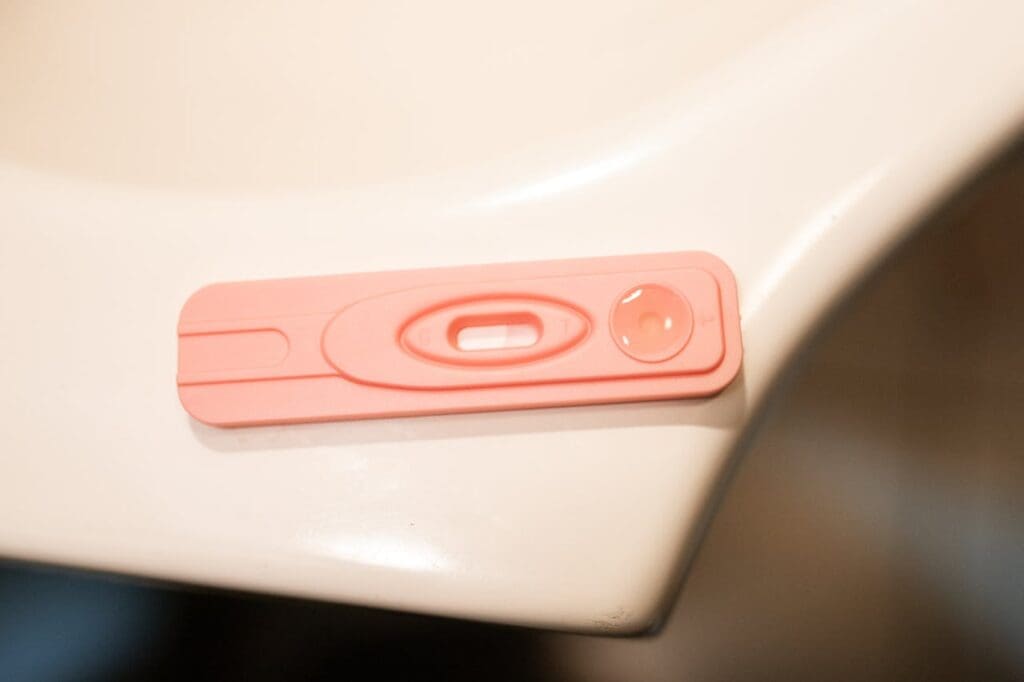
You take the test. It’s negative. Maybe you take a second one just to be sure. Still negative. And yet your period is nowhere to be found. If you are in your early 40s and this has started happening, I want you to take a breath, because you are not alone, and you are not imagining things.
A missed period but not pregnant is one of the most common concerns I hear from women in midlife. It can feel alarming, especially if your cycle has always been predictable. But more often than not, what is happening is not a crisis. It is a transition.
This article is for women who are starting to notice changes in their cycles and want real answers. We are going to talk about what is actually going on hormonally, what symptoms to watch for, and when it makes sense to reach out to a healthcare provider.
What People Often Mean When They Say Their Period Is “Late”
When a woman in her 40s says her period is late or missed, she usually means one of a few things: her cycle has gone longer than usual, her period was lighter or shorter than normal, or it simply did not come at all that month.
All of these reflect hormonal fluctuation and are worth paying attention to. Your cycle is a monthly report card from your body, when it changes, it’s worth understanding why.
The Most Common Reasons for a Missed Period in Your 40s
Perimenopause
This is the one most women in their early-to-mid 40s do not expect to be hearing about yet. Perimenopause, the years-long transition leading up to menopause, can begin as early as your late 30s or early 40s. Skipped or irregular periods are one of the hallmark signs.
During perimenopause, estrogen and progesterone levels fluctuate unpredictably. Some months ovulation happens on schedule. Other months it does not happen at all, which means no hormonal signal triggers a period. This is called an anovulatory cycle, and it is completely normal during this stage, even if it is disconcerting.
One patient of mine came in convinced something was seriously wrong. She was 43, healthy, active, and had always had a regular cycle. Then, over the course of about six months, her period started arriving late, then early, then skipping a month entirely. Once we looked at the full picture of her symptoms, including trouble sleeping, occasional hot flashes, and what she described as “brain fog,” it became clear that perimenopause had quietly begun.
Related Post: Perimenopause Rage Is Real (And It’s More Common Than You Think)
Stress and Cortisol
Chronic stress is one of the most underappreciated causes of menstrual changes. When your body is under sustained stress, it elevates cortisol, which can suppress the hormones responsible for triggering ovulation. No ovulation often means no period, or a very delayed one.
This is not a character flaw or a sign that you need to simply calm down. It is a physiological response. Your body, under pressure, deprioritizes reproduction. Understanding that connection can help you approach the situation with compassion rather than frustration.
Thyroid Dysfunction
An underactive thyroid (hypothyroidism) is surprisingly common in women in their 40s and is frequently missed or misattributed to aging or stress. It can cause missed periods, fatigue, weight changes, and a general sense of feeling “off.” A simple blood test can tell us a great deal, and it is one of the first things I check when a patient comes in with irregular cycles alongside exhaustion.
Significant Weight Changes or Over-Exercising
Both ends of the spectrum matter here. Rapid weight loss, very low body fat, or intense exercise without adequate fueling can disrupt the hormonal axis that regulates your cycle. So can significant weight gain. The body is always seeking balance, and dramatic shifts can temporarily interrupt that balance.
Other Hormonal Conditions
Polycystic ovary syndrome (PCOS), prolactin imbalances, and early ovarian insufficiency can all cause missed periods. These are less common but worth ruling out, particularly if you are experiencing other symptoms alongside an irregular cycle.
How Long Does Perimenopause Last?
This is one of the questions I hear most often, and I understand why. Women want to know what to expect and when it will end. The honest answer is that perimenopause typically lasts between four and eight years, though it can be shorter or longer. Menopause itself is defined as 12 consecutive months without a period that isn’t caused by something else, such as pregnancy, thyroid disorders, or certain medications. After that point, you are considered postmenopausal.
What is important to understand is that symptoms do not necessarily stop once your period does. Vasomotor symptoms like hot flashes and night sweats last an average of 7 to 10 years, and for many women they continue for several years after the final menstrual period. About one‑third of women experience them for more than a decade.
In the years leading up to that milestone, cycles can become unpredictable in all sorts of ways: shorter cycles, longer cycles, heavier bleeding, lighter bleeding, and yes, missed periods. No two women experience this the same way.
Symptoms That Often Come Along for the Ride
If perimenopause is the underlying cause of your missed period, you may also be noticing some of the following. Not everyone experiences all of these, and they can range from mild to disruptive:
- Hot flashes or night sweats
- Sleep disturbances, especially waking between 2 and 4 a.m.
- Mood shifts, increased anxiety, or irritability that feels out of proportion
- Brain fog or difficulty concentrating
- Fatigue that does not improve with rest
- Changes in libido
- Vaginal dryness or discomfort
- Joint aches or changes in skin and hair
One of my patients described this period of her life as “feeling like a stranger in my own body.” She was not wrong. When multiple systems shift at once, it can feel deeply disorienting. That experience is valid, and it is also something we can work with.
When to See a Provider
Missing one period when you have no other symptoms and a negative pregnancy test is usually not cause for alarm. But there are situations where it makes sense to get checked:
- You have missed two or more periods in a row
- Your cycles become consistently irregular, very frequent (<21 days), or widely spaced (>35–45 days)
- You are experiencing significant fatigue, unexplained weight changes, or hair loss
- You have pelvic pain or unusual discharge
- You are under 40 and your cycles are becoming irregular
- You are trying to conceive and your cycle is disrupted
- Something just feels off and you want answers
That last one matters. You do not need to meet a checklist of symptoms to deserve a conversation with someone who will actually listen to you.
What a Thorough Evaluation Looks Like
When a patient comes to me with concerns about missed or irregular periods, we do not just run a single test and call it done. We look at the full picture.
That starts with a detailed symptom history — because timing, pattern changes, and context matter more than a single lab value. In women over 40, perimenopause is often a clinical diagnosis based on symptoms and cycle changes. When appropriate, we may check labs such as thyroid function, prolactin, or other markers to rule out underlying conditions. Hormone levels like FSH and estradiol can sometimes be helpful, but they fluctuate widely in perimenopause and are not always required to make the diagnosis. We also review lifestyle factors like sleep, stress, nutrition, and exercise, since these can meaningfully affect cycles.
What I find is that women often arrive having already seen two or three providers and still not feeling heard. They have been told their labs are “normal” even when something clearly feels wrong. Normal ranges are broad. Context matters.
Yes. Until you have gone 12 consecutive months without a period, pregnancy is still possible. Irregular cycles do not mean you cannot ovulate. If you are not planning to conceive, continue using contraception until your provider confirms you have reached menopause.
Yes, this is common in perimenopause. Cycles can be unpredictable. You might skip a month or two and then have a normal (or heavier than usual) period. If you experience very heavy bleeding, bleeding that lasts longer than seven days, or bleeding after 12 months without a period, contact your provider.
Absolutely. Sustained physical or emotional stress can suppress ovulation by disrupting the hormonal signaling between your brain and ovaries. This is one reason why a missed period does not always point to perimenopause. Sometimes it is your body asking for rest.
There is no single definitive test. Diagnosis is based primarily on symptoms and age, sometimes supported by hormone levels. FSH (follicle-stimulating hormone) can be elevated during perimenopause, but levels fluctuate, so a single result is rarely conclusive. A thorough symptom history is often more telling than any one number.
Quite a bit, actually. Prioritizing sleep, managing stress, eating to support hormone balance, and reducing alcohol and caffeine can all make a meaningful difference. Some women find significant relief with hormone therapy or targeted supplementation. The key is getting a personalized plan rather than guessing, which is exactly what we work on together during a telehealth visit.
Key Takeaways About Missing Your Period…
- A missed period in your 40s with a negative pregnancy test is often related to perimenopause, stress, or thyroid changes, not a crisis.
- Perimenopause can begin as early as the late 30s and lasts, on average, four to eight years.
- Irregular cycles are one of the first signs of the perimenopausal transition and often come with other symptoms like poor sleep, mood changes, and fatigue.
- You do not need a checklist of symptoms to reach out for support. Intuition counts.
- A personalized evaluation, not a one-size-fits-all approach, is the most effective way to understand what is happening in your body.
A Closing Thought
Missing a period when you are not pregnant can feel alarming. It can send you down a rabbit hole of searching, spiraling, and second-guessing. But often, it is just your body beginning a new chapter, not signaling something is broken.
What matters most is that you do not have to figure it out alone. When you have someone who takes the time to connect the dots with you, to look at your symptoms in the context of your whole life, and to build a plan around what actually makes sense for you, things become much clearer.
Being heard is part of healing. And you deserve both.
If you are ready to stop guessing and start getting real answers about your health, I would love to support you. Book a telehealth appointment and we will take the time to look at the full picture together, without rushing, without dismissing, and without leaving you with more questions than you came in with.
(Telehealth appointments are currently available for patients located in Arizona and New York.)
This information is educational and not a substitute for personalized medical care.