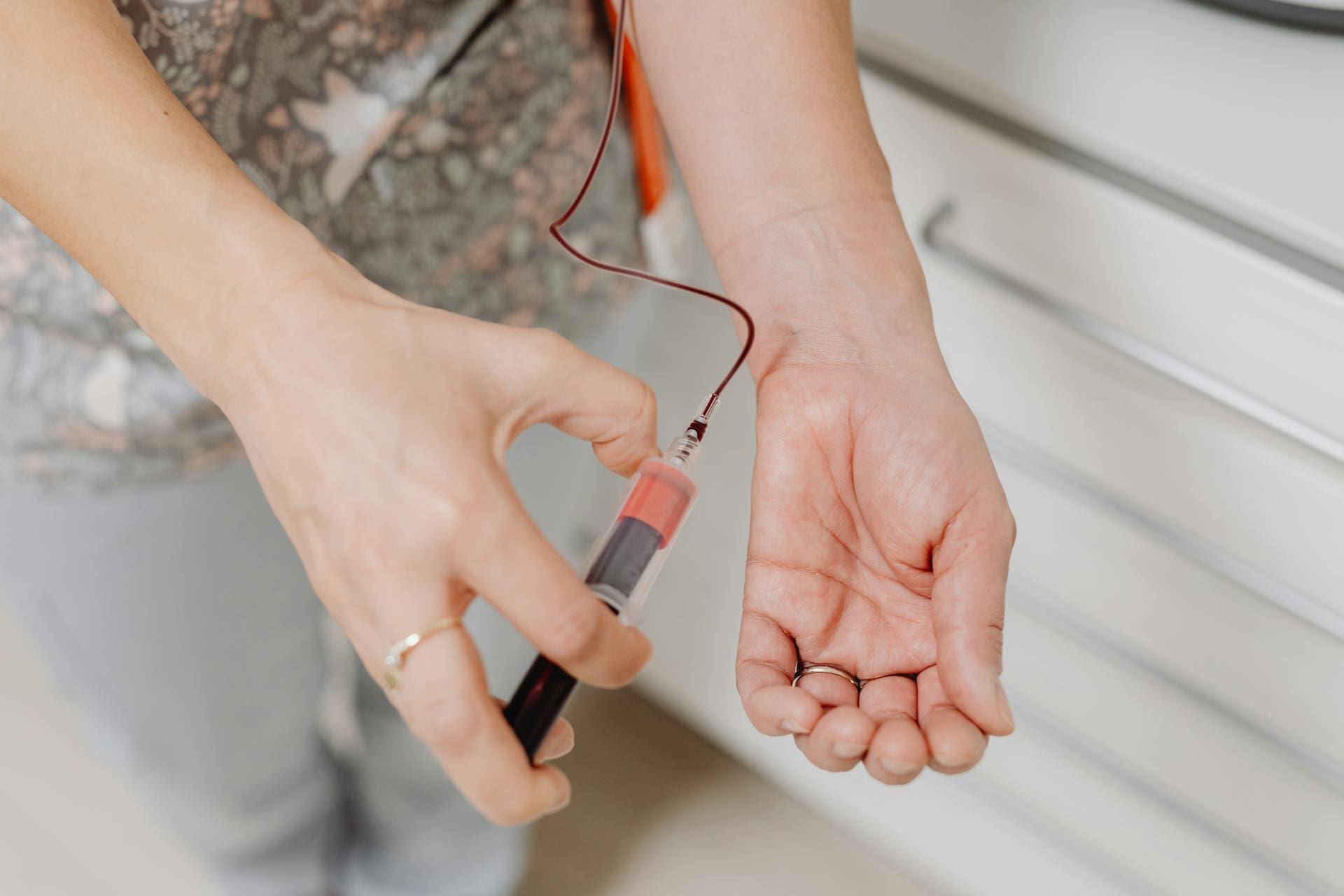

She had already been to three different providers. She had bloodwork done twice. Both times, she was told her results were normal and sent home with no real answers. By the time she came to me, she was exhausted, frustrated, and starting to wonder if she was making the whole thing up.
She was not making it up. And her labs were not as normal as she had been told.
This is one of the most common stories I hear. A woman in her 40s knows something has shifted. Her sleep is off, her weight is changing, her mood feels unpredictable, and her energy is nowhere near what it used to be. She gets hormone labs done. The report comes back with a note that says within normal limits, and she leaves the office with more questions than she arrived with. If this sounds familiar, this article is for you. We are going to talk about what hormone labs for women should actually include, why standard panels often miss the full picture, and what it looks like to get a workup that actually connects the dots.
Why “Normal” Does Not Always Mean You Feel Well
Reference ranges on lab reports are built from population averages. They tell you whether your result falls within the range seen in a broad group of people, but they do not tell you what is optimal for you specifically. A woman whose estradiol sits at the very bottom of the normal range may feel significantly different from a woman whose level is in the middle of that same range. Both results are technically normal. Only one woman feels like herself.
This is why symptom context matters as much as any number on a page. When I sit with a patient and review her labs, I am not just looking at whether values fall within a reference range. I am looking at where her values sit relative to her symptoms, her history, her age, and her goals. That combination tells a much more complete story.
What I Actually Check When Symptoms Feel Hormonal
A comprehensive hormone panel is not one single test. It is a collection of markers that, taken together, paint a picture of how your endocrine system is functioning. Here is what I typically assess when a patient comes in with concerns about hormonal symptoms.
CBC (Complete Blood Count)
Heavy or irregular cycles can lead to anemia. Even mild anemia can cause fatigue, poor concentration, and exercise intolerance. A CBC helps identify anemia or other blood-related concerns that may be driving symptoms.
CMP (Comprehensive Metabolic Panel)
The CMP evaluates liver function, kidney function, electrolytes, and glucose. This matters because:
- The liver plays a key role in hormone metabolism
- Glucose regulation affects energy and weight
- Kidney and electrolyte balance impact overall wellbeing
Hormones function within these systems, not independently of them.
Thyroid Panel
Thyroid dysfunction is often overlooked in midlife women, and its symptoms overlap almost entirely with perimenopause: fatigue, weight gain, mood changes, hair thinning, brain fog, and irregular cycles. TSH is a useful starting point, but depending on symptoms and history, additional testing (free T4, sometimes free T3 and thyroid antibodies) may be appropriate. I have had patients whose fatigue resolved almost completely once we identified and addressed an underlying thyroid issue that had been missed for years.
Lipid Panel
Cholesterol patterns often shift during perimenopause and after menopause due to hormonal changes. A lipid panel helps assess cardiovascular risk and establish a baseline, particularly if menopausal hormone therapy (MHT) is being considered.
Hemoglobin A1c and Fasting Insulin
Hormone health does not exist in a vacuum. Insulin resistance, even when blood sugar looks technically normal, can drive weight changes, fatigue, and hormonal imbalance. This is particularly relevant for women in midlife who notice changes in how their body responds to food or exercise. I often include fasting insulin alongside a comprehensive hormone panel for this reason.
Iron Studies and Ferritin
Ferritin reflects stored iron. Low ferritin, even without overt anemia, can contribute to fatigue, hair shedding, and decreased stamina. This is especially important in women with heavy bleeding.
Vitamin B12 and Folate
Low B12 and folate can cause fatigue, neuropathy, mood changes, and cognitive symptoms. Folate supports red blood cell production and cellular repair. These deficiencies are common and often correctable.
Vitamin D
Vitamin D supports bone health, immune regulation, and muscle function. As women approach menopause and bone density becomes a greater concern, ensuring adequate vitamin D levels becomes increasingly important.
When I Check Reproductive Hormones
Reproductive hormone testing is not necessary for every woman over 40 with typical perimenopausal symptoms. Perimenopause is primarily a clinical diagnosis based on cycle changes and symptom patterns.
However, hormone labs can be helpful when they answer a specific clinical question.
Women Under 40 With Irregular Cycles
If a woman under 40 presents with cycle disruption, labs such as FSH and estradiol may help evaluate for primary ovarian insufficiency (POI), which requires different monitoring and management than expected age-related transition.
Unclear or Atypical Presentation
If the clinical picture does not clearly fit perimenopause, targeted hormone testing may help clarify the situation.
Menopausal Hormone Therapy (MHT)
Routine serial hormone testing is not required for every woman on MHT. However, labs may be helpful in select situations:
- Persistent symptoms despite therapy
- Unexpected bleeding patterns
- Assessing absorption concerns
- Supporting bone health assessment when clinically relevant
In these cases, labs are used strategically — not reflexively.
A Realistic View of FSH and Estradiol
FSH fluctuates significantly during perimenopause and is not diagnostic on its own. A single elevated value does not confirm menopause.
Menopause is diagnosed clinically after 12 consecutive months without a period. Lab testing may support the diagnosis in certain situations, but in women over 40 with typical symptoms, it is often unnecessary.
Hormone levels must always be interpreted in context.
Estrogen (Estradiol)
Estradiol is the primary form of estrogen during reproductive years and fluctuates throughout the menstrual cycle. During perimenopause, levels can vary dramatically from month to month, which is part of why symptoms feel inconsistent.
Because of this variability, a single estradiol level is not diagnostic for perimenopause. I may check estradiol in specific situations such as evaluating women under 40 for ovarian insufficiency, assessing unclear clinical presentations, or in select cases when reviewing menopausal hormone therapy, but it is not routinely required for typical midlife transition.
Progesterone
Progesterone rises after ovulation and reflects ovulatory function in a given cycle. In certain situations, such as evaluating ovulation in younger women or assessing irregular cycles, mid‑luteal progesterone can help confirm whether ovulation is occurring.
However, progesterone levels fluctuate significantly within a single day and from cycle to cycle. For that reason, routine progesterone testing is not typically necessary in perimenopause, where cycle patterns and symptoms are often more informative than a single lab value.
FSH and LH
Follicle-stimulating hormone (FSH) and luteinizing hormone (LH) are produced by the pituitary gland and regulate ovulation. Elevated FSH can be an early indicator of diminishing ovarian reserve and perimenopausal transition. However, because FSH fluctuates considerably during perimenopause, a single elevated result is not diagnostic on its own. It needs to be interpreted alongside symptoms and other markers.
FSH testing is most useful in specific scenarios, such as evaluating primary ovarian insufficiency in women under 40 or clarifying unclear cases of amenorrhea. In women over 45 with typical symptoms, menopause is usually diagnosed clinically rather than by lab testing.
Testosterone
Yes, women have testosterone, and yes, it matters. Testosterone influences libido, energy, motivation, muscle tone, and cognitive clarity. Levels gradually decline with age and may decrease more noticeably after surgical menopause.
The strongest evidence for testosterone therapy is in women with persistent low libido. In that setting, it can make a meaningful difference. There is ongoing research looking at its potential role in mood, energy, muscle mass, and bone health. It is not a universal solution, but for some women, it can be part of a thoughtful, individualized plan. Many women are surprised to learn this is part of the picture, but for some, optimizing testosterone is what finally helps them feel like themselves again.
Testosterone levels alone do not determine how you feel. When therapy is considered, labs are used for safety and monitoring, and dosing is kept within physiologic female ranges.
Cortisol
Chronic stress affects the entire hormonal system. Elevated stress hormones can disrupt sleep, influence appetite and fat distribution, and worsen mood symptoms. Over time, this can create a pattern of symptoms that feels very similar to hormonal imbalance.
In some women, addressing stress physiology is just as important as addressing reproductive hormones. Cortisol testing is not routine, but in certain clinical situations it can help clarify the picture and guide next steps.
Do You Need to Fast for Labs?
This is one of the most common questions I get, and the answer depends on what is being tested.
For most reproductive hormones, including estradiol, progesterone, FSH, LH, and testosterone, fasting is not strictly required.
However, if your panel includes fasting glucose, fasting insulin, or a lipid panel (which is often ordered alongside a hormone workup), fasting for 8 to 12 hours beforehand is recommended. I usually suggest scheduling labs first thing in the morning to make that easier.
It is also important to stop biotin supplements for at least 48 hours (and longer if you take high doses), since it can interfere with some thyroid and hormone assays.
Timing within your cycle also matters more than fasting for most hormonal markers. Progesterone, for example, is most informative when drawn 7 days after ovulation (around day 21 of a standard 28-day cycle). Estradiol and FSH are typically drawn on days 2 through 4 of the cycle. If your cycles are irregular, as they often are in perimenopause, we work with what we have and interpret accordingly. Your provider should give you specific instructions based on which markers are being checked.
Labs for Menopause vs. Perimenopause: Is There a Difference?
The short answer is that the markers themselves are largely the same. What changes is the interpretation. During perimenopause, hormone levels fluctuate widely, so a single snapshot may not tell the whole story. FSH may be elevated one month and normal the next. Estradiol can swing dramatically between cycles.
Menopause itself is diagnosed clinically after 12 consecutive months without a period. Hormone levels often reflect this shift, with persistently higher FSH and lower estradiol, but labs are supportive rather than diagnostic. At that stage, lab testing typically shifts toward monitoring cardiovascular health, bone density, and guiding hormone therapy when appropriate.
Related Post: Is HRT Right for You? What the Evidence Actually Says About Hormone Therapy for Women
When Your “Hormones Are Off”
When a woman tells me she thinks her hormones are off, she usually does not mean she has read a lab report and identified a specific deficiency. She means she has been feeling unlike herself for months, sometimes years, and she has a sense that something hormonal is driving it. That instinct is often right.
Hormonal imbalance in midlife is rarely one marker being wildly out of range. In fact, during perimenopause, hormone levels can fluctuate significantly from month to month. A normal lab panel does not rule out a transition that is driven by ovarian variability rather than stable deficiency. This is why menstrual pattern, symptom history, and overall health context matter more than a single blood draw. Labs can be supportive, but they are only one piece of the picture.
One of my patients told me that when she received my comprehensive notes after her visit, she almost cried tears of relief. She said she finally felt heard after years of being dismissed. The labs had not dramatically changed. What changed was that someone interpreted them alongside her story instead of in isolation.
Yes. Many primary care providers are comfortable ordering hormone labs when there is a clear clinical question. However, routine annual bloodwork does not typically include reproductive hormone testing unless symptoms warrant it.
It’s also important to know that in women over 45, menopause is usually diagnosed clinically based on menstrual history rather than labs. Testing is most helpful when cycles are irregular, symptoms are unclear, or the clinical picture is atypical.
In women who do not have reliable menstrual markers — such as those who have had a hysterectomy, endometrial ablation, or who use certain IUDs — hormone testing may help clarify menopausal status when symptoms suggest a transition. Labs are also essential when evaluating possible primary ovarian insufficiency in women under 40.
If you feel your concerns are not being fully explored, working with a provider experienced in midlife hormonal health can be helpful.
Hormone labs are not typically repeated on a routine schedule in midlife. In most women over 45, care is guided by symptoms and clinical history rather than serial hormone measurements. Repeat testing may be appropriate in specific situations, such as confirming primary ovarian insufficiency in women under 40, evaluating women who are not responding as expected to hormone therapy to assess absorption, or ensuring adequate estrogen support in those with osteopenia, early menopause, or ovarian insufficiency who are using therapy for bone protection. In most cases, follow‑up is guided more by clinical response than by targeting a specific lab number.
This is one of the most important questions, and the answer is: keep going. Normal on a lab report does not mean optimal for your body. It also does not mean the conversation is over. There may be markers that were not included in your panel, there may be context around your results that changes their meaning, or there may be other contributing factors that have not yet been explored. A good provider who specializes in this area should not stop at a normal result if you are still symptomatic.
Absolutely. A telehealth visit is an efficient and often more comfortable way to have an in-depth conversation about your symptoms, determine which labs make sense for you, get orders sent to a lab near you, and then review results together in a follow-up visit. Many women find that telehealth actually gives them more time and attention than an in-person visit where they felt rushed.
They can be, depending on your symptoms, labs, and overall metabolic health. Hormonal shifts in midlife, especially declining estrogen, can affect where the body stores fat and contribute to changes in body composition. Hormone therapy is not a weight loss treatment, but it can relieve menopausal symptoms and may modestly help with central fat changes.
GLP‑1 medications are evidence based treatments for obesity and can produce meaningful weight loss when combined with lifestyle support. Early research suggests postmenopausal women using hormone therapy may experience greater weight loss on GLP‑1 medications compared to those not using hormones, but larger studies are still needed. The key is individualized treatment based on your unique health picture, not what worked for someone else.
A Closing Thought
Getting your hormone labs done is a starting point, not a finish line. The results mean something specific in the context of who you are, how you feel, and what you are trying to get back to. A number on a page without that context is just data. With it, it becomes a path forward.
I opened my practice because I spent too many years watching women be sent home with “normal” lab results and no real answers. I have been in that position myself. I know what it feels like to know something is wrong and not be believed. That experience is part of why I do this work, and it is why I take the time to look at the full picture with every patient.
You deserve care that actually listens. And you deserve results that actually make sense.
Key Takeaways about Your Hormone Labs
- Reference ranges tell you what is average for a population, not what is optimal for you.
- A comprehensive evaluation often includes CBC, CMP, thyroid testing, lipids, A1c, fasting insulin, iron studies, B12, folate, and vitamin D.
- Reproductive hormone testing is targeted and used to answer specific clinical questions — not ordered routinely for every woman.
- Fasting is not always required for hormone labs, but timing within your cycle and which markers are being tested both matter.
- Normal labs and feeling well are not the same thing. Context and symptoms are just as important as the numbers.
- Perimenopause causes significant hormonal fluctuation, which is why a single result is rarely the whole story.
If you are ready to stop guessing and get a hormone workup that actually looks at the full picture, I would love to help. Book a telehealth appointment and we will take the time to go through your symptoms, order the right labs for you, and review what they actually mean together.
(Telehealth appointments are currently available for patients located in Arizona and New York.)
This information is educational and not a substitute for personalized medical care.